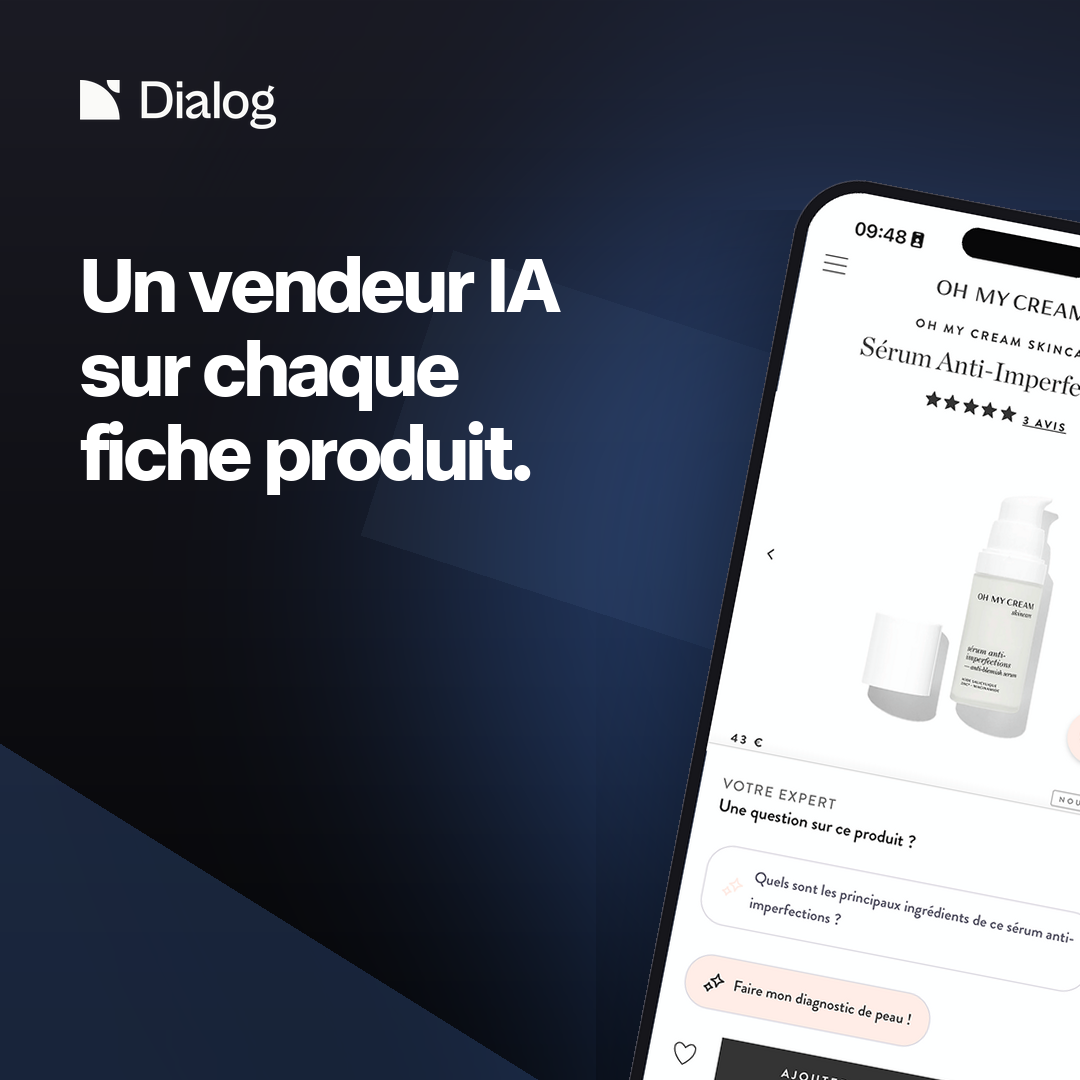
the shipped creative, exactly as it ran
Why this format works
The strongest visual an e-commerce product has is its own product page. This format frames a real storefront with the agent visibly at work: a shopper's question asked, an answer given, right on the page. The screenshot does the convincing and the headline only names what you are looking at.
Prospects recognize the surface instantly, because it looks like their own store. That recognition is the hook. No abstract illustration of a chatbot produces it, which is why the format keeps the product page real instead of redrawing it.
How Pierce ships it
- 1
One claim, one screen
The brief pairs a single headline claim with one storefront view that proves it. If the screen does not show the claim happening, the pair is rejected before anything renders.
- 2
Compose the frame
The storefront capture is placed in a clean device frame with generous margins, a locked brand palette around it, and a reserved safe area for the logo.
- 3
Render, judge, iterate
Attempts are scored by a vision judge for legibility, framing, and brand fit. Failed attempts get a revise note and the loop continues.
- 4
Operator lock and ship
The operator picks the winner on taste, not on score alone, and every ship is approved by a human before it spends a cent.
Related formats
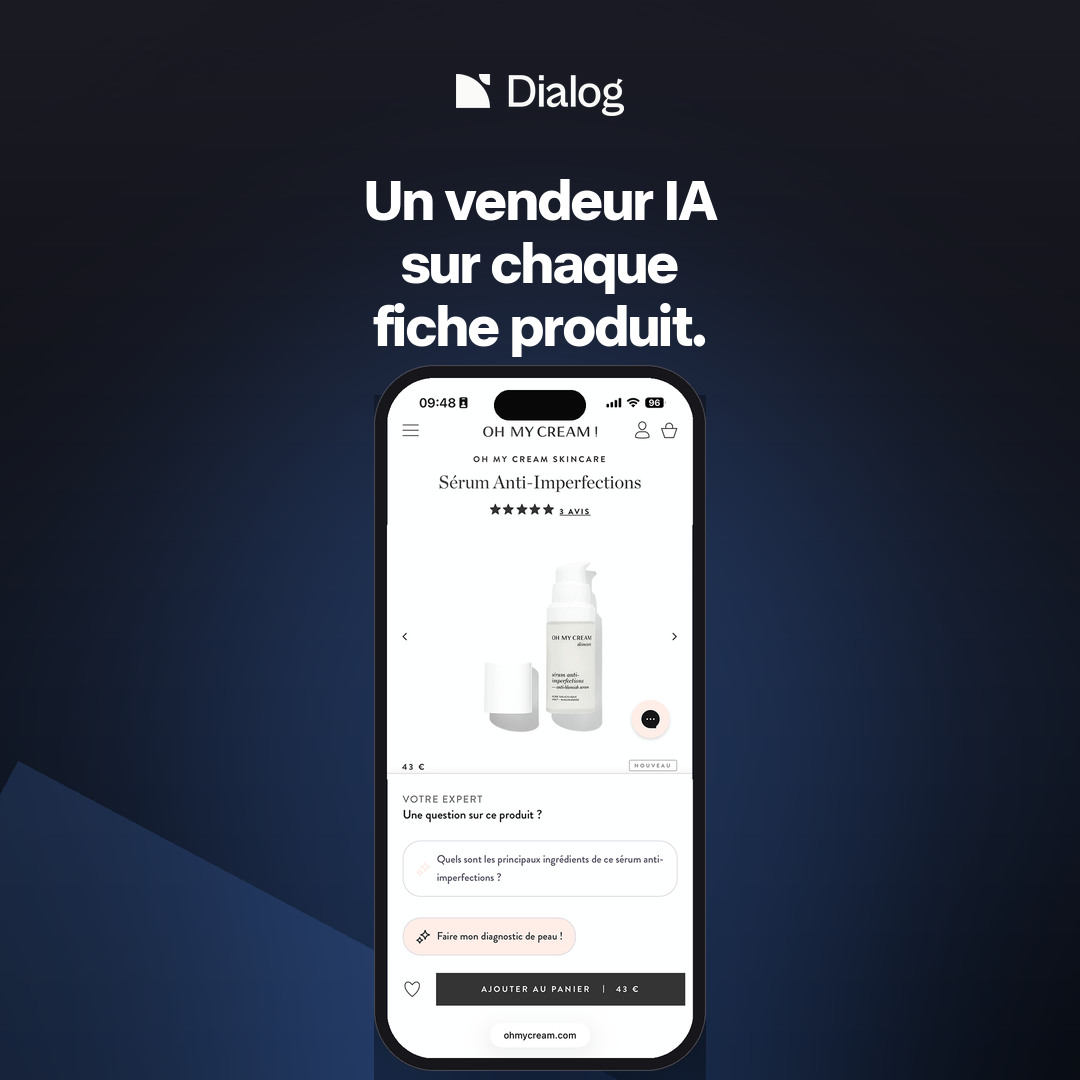
Product hero, full frame
The full-height phone variant: the storefront carries the ad and the headline stays out of its way.
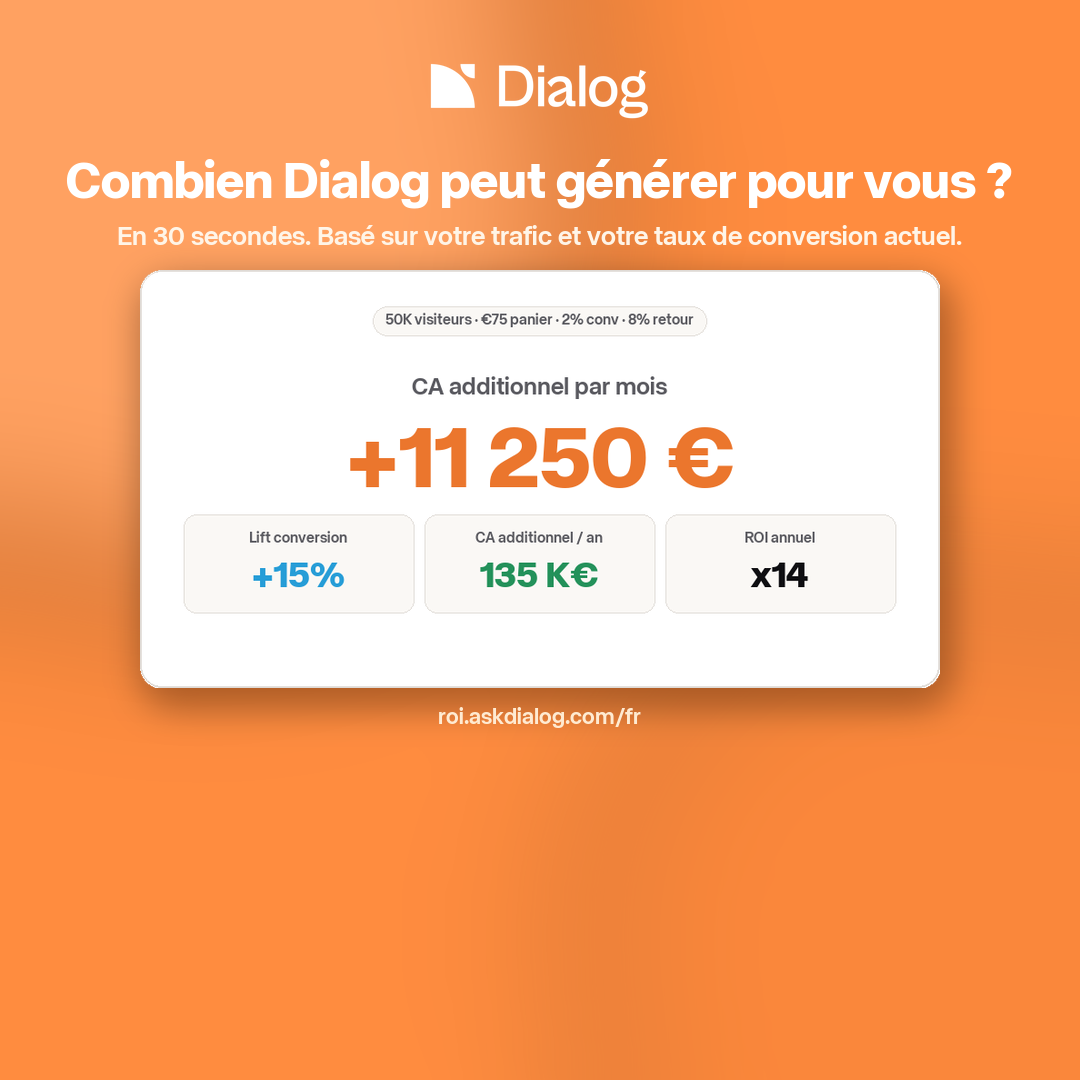
Tool hook
The ad is a working calculator result: plug in your traffic, and the number the tool computes becomes the hero.